Higgsfield vs Seedance: How Prompting Actually Differs Between These Two AI Video Tools
August 7, 2026 · 9 min read
Higgsfield and Seedance both get lumped into the same "AI video generator" bucket, and both routinely show up next to Sora, Runway, and Kling on the same comparison lists. That grouping hides a real difference in what each tool is actually built to do well. Higgsfield is built around keeping a specific character or product looking consistent across shots and around dialing in a camera move from a menu of cinematic presets rather than describing it from scratch in prose. Seedance is built around narrative sequencing — multiple shots, in order, each with its own beat — closer to directing a short ad than describing a single moving image. A prompt written for one carries almost none of its structure over cleanly to the other, and treating them as interchangeable is where most of the wasted generations come from.
Two tools solving different video problems
The fastest way to tell these two apart is to ask what happens if you only have one sentence to describe your video. For Higgsfield, that sentence is usually about who is in frame and what camera move should happen to them — a specific face or product needs to stay recognizable, and the motion is often chosen from a preset rather than invented in text. For Seedance, that sentence is usually the setup for a sequence — an opening state and a change that happens across several beats, because the tool is built to hold a short narrative arc together rather than a single elegant camera move. Neither tool is worse at the other’s job by accident; they were built around different core use cases, one closer to creator content and product video, the other closer to short-form narrative and ad sequences.
Higgsfield: character consistency and preset-driven camera control
Higgsfield’s prompting model leans more on selection than on prose. A meaningful part of controlling the output happens through picking a camera or motion preset from a menu — a push-in, an orbit, a whip pan, a specific cinematic move — rather than trying to describe that move in words the way you would for Sora or Veo. The text prompt still matters, but it is doing a narrower job: describing the subject, the setting, and any styling detail the preset itself does not cover, rather than carrying the entire camera and motion instruction on its own. The other defining piece is character and product consistency: Higgsfield is frequently used specifically because a face, a model, or a product needs to look like the same subject across multiple generated clips, which means the reference image or character setup is doing as much work as the prompt text itself, and a prompt that ignores the reference and tries to re-describe the subject from scratch tends to fight against what the tool is already doing automatically.
Seedance: shot lists and multi-beat narrative sequences
Seedance rewards a structure closer to a shot list than a single description, especially once a clip needs to cover more than one beat of action. Rather than one flowing paragraph describing a whole scene, a Seedance prompt tends to work best broken into an explicit shot count and duration up front, followed by numbered shots that each name a distinct moment — a shot list along the lines of "[X] shots, [Y]s total, [aspect ratio]" followed by a plain description of what happens in each numbered shot. This matters most once your idea has more than one thing happening: a product appearing, then rotating, then a hand picking it up reads far more reliably to Seedance as three numbered beats than as one long sentence trying to hold all three events in sequence. A single, simple, single-beat shot does not need this structure nearly as much — it is multi-beat sequences where the difference between a flowing paragraph and a numbered list becomes obvious in the output.
The prompt structure difference, side by side
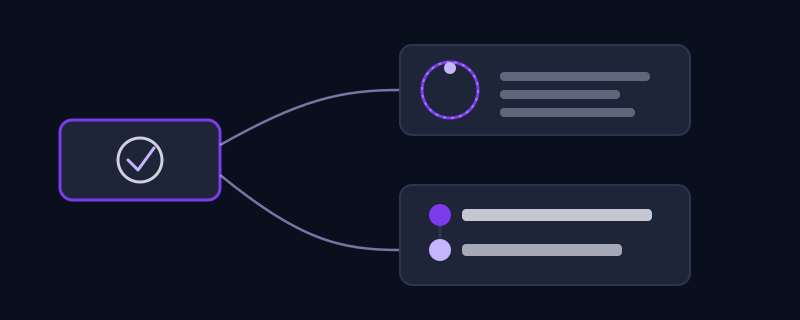
Take a single concept: a sneaker rotating on a pedestal, then a hand lifting it off the pedestal into frame. For Higgsfield, the prompt is short and paired with a preset selection: description of the sneaker and pedestal setting, a chosen orbit or slow-rotate camera preset, and a note on lighting and background — the actual rotation motion is coming from the preset, not from a written camera instruction, and the reference image of the specific sneaker anchors what the model keeps consistent. For Seedance, the same idea becomes a numbered sequence: "[2] shots, [4s], 1:1 aspect ratio. Shot 1: sneaker rotates slowly on a lit pedestal against a plain background. Shot 2: a hand enters frame and lifts the sneaker off the pedestal, camera holds steady." The Seedance version spells out what happens first and what happens next as two explicit, ordered events, where the Higgsfield version leans on a preset to handle the motion and lets the prompt text focus on subject and consistency instead.
Translating one idea across both
Moving an idea from one tool to the other is less about rewriting every word and more about relocating where the instruction lives. Going from Seedance to Higgsfield: collapse the numbered shot list down to its single most important beat, since Higgsfield is not built to hold a multi-shot sequence the way Seedance is, and move the camera motion out of the text and into a preset choice instead of trying to describe it in prose. Going from Higgsfield to Seedance: take whatever the preset was doing and put it into words as an explicit shot description, and if the idea only has one beat, decide whether it is worth padding into two shots (a build and a payoff) to use Seedance’s sequencing strength, or whether a single-shot prompt is genuinely the better fit for that particular idea. Neither direction is a straight copy-paste — the structural adjustment is exactly what determines whether the second tool’s result looks intentional or accidental.
Common mistakes
Writing a long, Sora-style flowing paragraph for Higgsfield and expecting it to control the camera the way a preset would — the model does not read prose camera instructions with the same precision the preset menu gives you directly. Writing one continuous description for Seedance when the idea genuinely has two or three distinct beats, then getting a clip where the middle event gets rushed or dropped because nothing marked it as its own numbered moment. Re-describing a subject from scratch in a Higgsfield prompt instead of trusting the character or product reference to do that work, which can actively work against the consistency the reference was set up to provide. Assuming Seedance’s numbered shot list is required for every prompt — a single simple action does not need three shots invented just to fit the format, and forcing structure onto a one-beat idea can make the pacing feel padded rather than deliberate.
Both tools are good at what they were built for, and the comparison lists that treat every AI video generator as one interchangeable category miss the actual reason to pick one over the other. If the job is keeping a specific face or product consistent across a handful of clips with a clean, chosen camera move, that points toward Higgsfield’s preset-and-reference model. If the job is a short sequence with a real beginning, middle, and end — a product appearing, then being used, then a final beat — that points toward Seedance’s shot-list structure. The prompt itself needs to be built around whichever of those two jobs the video is actually doing, not adapted after the fact from whichever tool’s prompt style happens to be more familiar.
Frequently asked questions
What is the main difference between Higgsfield and Seedance prompts?
Higgsfield prompts lean on selecting a camera or motion preset alongside a character or product reference, with the text prompt mainly covering subject and styling detail rather than camera instructions. Seedance prompts lean on an explicit, numbered shot list that breaks a scene into separate beats, which matters most once an idea has more than one distinct moment happening.
Can I use the same prompt in Higgsfield and Seedance?
Not directly for anything beyond a very simple single-beat idea. A Higgsfield prompt written around a preset camera move has no equivalent instruction for Seedance to read, and a Seedance numbered shot list has no direct home in a tool built to work with a single preset and reference rather than a multi-shot sequence. The subject and setting description can carry over; the structure around it generally needs to be rebuilt for each tool.
When should I use Higgsfield instead of Seedance?
When the priority is keeping a specific face, character, or product looking consistent across clips, and the shot is a single camera move rather than a multi-beat sequence. Product showcases, creator-style content, and single-shot cinematic moves tend to fit Higgsfield’s preset-and-reference model better than a numbered shot list would.
Does Seedance always need a numbered shot list?
Only once an idea has more than one distinct beat. A single, simple action does not need three invented shots just to match the format — forcing that structure onto a one-beat idea tends to make the pacing feel padded. The numbered structure earns its value specifically when a scene has a real sequence of events to hold together.
Is there a faster way to write prompts for both Higgsfield and Seedance?
Promptima takes one plain-language video idea and generates a version structured for the tool you select — a preset-and-reference-oriented prompt for Higgsfield or a numbered shot-list prompt for Seedance — instead of you manually restructuring the same idea by hand for each tool’s conventions.
Write one video idea, get prompts tuned for Higgsfield and Seedance side by side →
✦ Try Promptima freeMore articles
Best AI Prompt Optimizer Tools in 2026 (And When to Use Each)
Prompt marketplaces, browser extensions, manual prompt engineering, and dedicated optimizers all solve a different version of the same problem. Here is how to tell which one you actually need.
How to Turn One Photo Into a Ready-to-Use AI Video Prompt
You have an image whose look you want to bring to life as a video. The problem is that video AI tools don’t read image prompts — they need camera, motion, and duration described in a completely different structure. Here’s how to bridge the two.