Prompts, tools, and workflows
Comparisons, deep dives, and practical guides for getting better results out of AI tools.
Best AI Prompt Optimizer Tools in 2026 (And When to Use Each)
Prompt marketplaces, browser extensions, manual prompt engineering, and dedicated optimizers all solve a different version of the same problem. Here is how to tell which one you actually need.
July 21, 2026 · 9 min read
How to Turn One Photo Into a Ready-to-Use AI Video Prompt
You have an image whose look you want to bring to life as a video. The problem is that video AI tools don’t read image prompts — they need camera, motion, and duration described in a completely different structure. Here’s how to bridge the two.
July 21, 2026 · 8 min read
Midjourney vs DALL-E vs Stable Diffusion vs Firefly: How Image AI Prompts Actually Differ
Midjourney, DALL-E, Stable Diffusion, and Adobe Firefly all read prompts differently — the same words that produce a great Midjourney image can get read as literal text somewhere else. Here is what actually changes, tool by tool, and how to translate a prompt between them.
July 30, 2026 · 10 min read
How to Write AI Prompts for Legal Work Without Getting Dangerously Generic Answers
"Draft me a lease" and "explain this clause" are the two most common legal prompts, and both routinely produce answers that sound authoritative and fit nothing about your actual situation. Here is the structure that fixes that, and the boundaries worth keeping in mind.
July 31, 2026 · 9 min read
How to Write AI Prompts for Marketing Copy That Doesn’t Read Like Every Other AI-Written Ad
A vague marketing prompt reliably produces the same five words every other business is getting from the same vague prompt. Here is the structure that gets you copy specific enough to actually run.
August 3, 2026 · 9 min read
ChatGPT vs Claude vs Gemini: How to Write Prompts Each Model Actually Follows
The same prompt typed into ChatGPT, Claude, and Gemini does not behave the same way in any of them. Here is what actually changes between the three, and how to adjust a prompt for each.
August 3, 2026 · 9 min read
How to Write AI Coding Prompts That Get You a Real Fix, Not a Guess
"Fix this bug" and "review my code" are the two most common developer prompts, and both routinely produce a plausible-looking change that solves the wrong problem or quietly breaks something else. Here is the structure that fixes that.
August 4, 2026 · 9 min read
Sora vs Runway vs Kling vs Veo: How AI Video Prompts Actually Differ
Sora, Runway, Kling, and Veo all generate video from text, but a prompt that nails one produces a stiff or generic clip on another. Here is what actually changes between the four, and how to translate a prompt across them.
August 6, 2026 · 9 min read
How to Write AI Prompts for Content and Blog Writing That Doesn’t Read Like Everyone Else’s AI Post
"Write a blog post about X" produces the same three-part structure, the same hedge-everything tone, and the same handful of transition words as a million other AI-written posts. Here is the structure that actually produces something worth publishing.
August 6, 2026 · 9 min read
Higgsfield vs Seedance: How Prompting Actually Differs Between These Two AI Video Tools
Higgsfield and Seedance both generate AI video, but one is built around presets and character consistency while the other is built around structured, multi-shot sequences. A prompt written for one produces a flat or confused result on the other. Here is what actually changes.
August 7, 2026 · 9 min read
How to Write AI Prompts for Resumes and Cover Letters That Don’t Sound Like a Template
"Write me a resume" and "write me a cover letter" reliably produce fluent, generic documents that could belong to almost any candidate for almost any job. Here is the structure that gets you something a hiring manager actually reads.
August 10, 2026 · 9 min read
AI Image Editing Prompts: How Inpainting and Generative Fill Differ From Generation Prompts
"Make the sky more dramatic" and "generate a sunset" look like the same kind of instruction, but one is editing a photo you already have and the other is inventing a scene from nothing. Here is what actually changes when you are editing an existing image instead of generating one.
August 10, 2026 · 9 min read
Zero-Shot vs Few-Shot vs Chain-of-Thought vs Role Prompting: How These Four Techniques Actually Differ
Zero-shot, few-shot, chain-of-thought, and role prompting all get grouped under the same vague heading of "prompt engineering," but each one changes a different part of how a model arrives at its answer. Here is what each technique actually does, when to use it, and how they combine.
August 11, 2026 · 10 min read
How to Write AI Email Prompts That Get Replies Instead of Getting Deleted
"Write me a follow up email" and "write me a professional email" are two of the most common AI prompts, and both routinely produce fluent, forgettable messages that read like they were sent to everyone. Here is the structure that gets an email actually read.
August 13, 2026 · 9 min read
Ideogram vs Leonardo vs Recraft vs Flux: How AI Image Prompts Actually Differ
Midjourney and DALL-E get most of the attention, but Ideogram, Leonardo, Recraft, and Flux each solve one specific problem the bigger names still handle poorly, and each one expects a genuinely different prompt because of it.
August 13, 2026 · 9 min read
How to Write AI Music Prompts That Sound Like a Song, Not a Loop
"Make me an upbeat pop song" produces something rhythmically competent and completely forgettable — a chord progression you have heard a hundred times, going nowhere in particular. Here is the structure that gets you something with an actual arc.
August 14, 2026 · 9 min read
How to Write AI Presentation Prompts That Don’t Produce a Generic Slide Deck
Ask an AI tool to build a deck about your product launch and you get a title slide, an agenda, four bullet-heavy slides, and a Thank You slide that could belong to any company on earth. Here is the prompt structure that gets you a deck people actually remember.
August 17, 2026 · 8 min read
How to Prompt for a Consistent Character Across Multiple AI Images and Video Clips
Generate the same character prompt twice in Midjourney or Sora and you rarely get the same face twice. Here is what actually keeps a character consistent across a set of images or a multi-shot video, and where prompt wording alone stops being enough.
August 17, 2026 · 8 min read
Short Prompts vs. Long Prompts: How Much Detail AI Tools Actually Need
"Be more specific" and "keep it short" are both common prompt advice, and both are correct — for different tools. Here is what actually happens to extra words in a ChatGPT prompt versus a Midjourney prompt versus a Sora prompt, and how to tell padding from real information.
August 18, 2026 · 9 min read
How to Write AI Avatar and UGC Video Prompts That Don’t Sound Like a Script Being Read
"Make an avatar video about our product" produces a presenter who looks fine and sounds like they are reading a permission slip. Here is the script and delivery structure that gets you something that sounds like a person actually talking.
August 20, 2026 · 9 min read
How to Write AI Prompts for Data Analysis That Don’t Produce Confident Nonsense
"Analyze this spreadsheet" hands a chat model a blank check to invent whichever story sounds most plausible, whether or not the data actually supports it. Here is the structure that gets you an analysis worth acting on.
August 20, 2026 · 9 min read
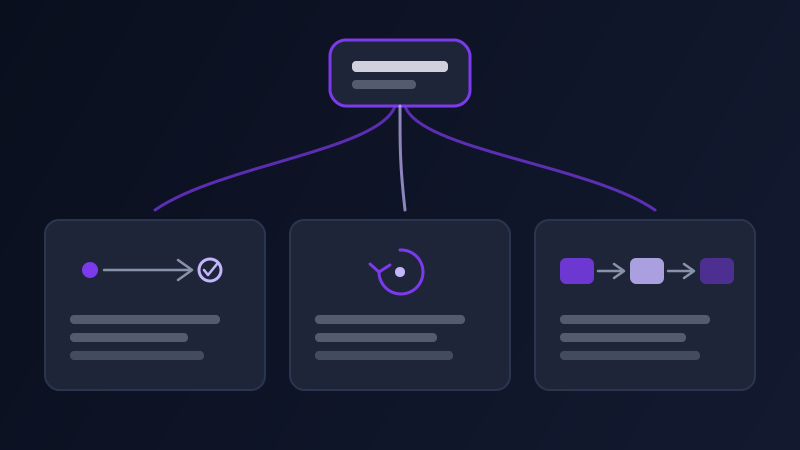
Single-Shot Prompting vs. Iterative Refinement vs. Prompt Chains: Three Ways to Get to a Finished AI Result
One prompt and done, several rounds of small adjustments, or a sequence of connected prompts — these are three different bets about where your effort goes, and picking the wrong one is a common reason a project either drags on or never quite lands.
August 21, 2026 · 9 min read
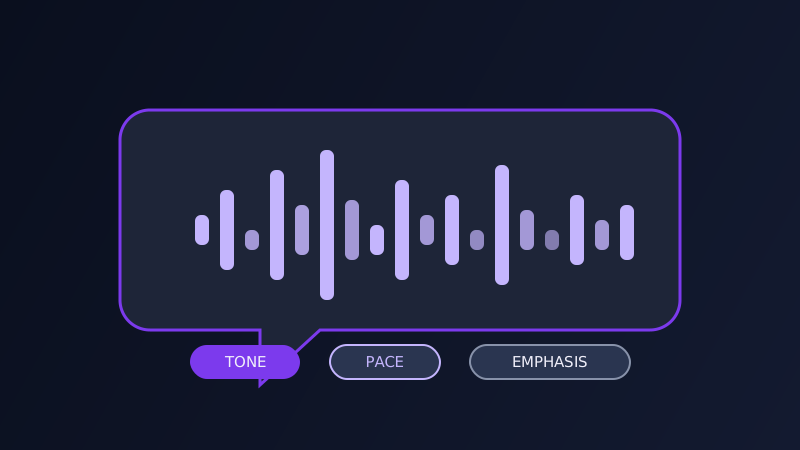
How to Write AI Voiceover Prompts That Sound Like a Person, Not a Narrator Reading a Script
Text-to-speech tools read exactly what you type, but the difference between a flat, competent narration and a voiceover that actually sounds like a person comes from instructions the script itself never carries: tone, pacing, emphasis, and a consistent persona.
August 24, 2026 · 7 min read

How to Write AI Product Photography Prompts That Look Like a Real Shoot, Not a Generic Render
A one-line product prompt usually comes back looking like a plausible product, not the actual one you are selling. The fix is naming the material, lighting, background, and shot type specifically, the details a general image prompt never needed.
August 24, 2026 · 7 min read
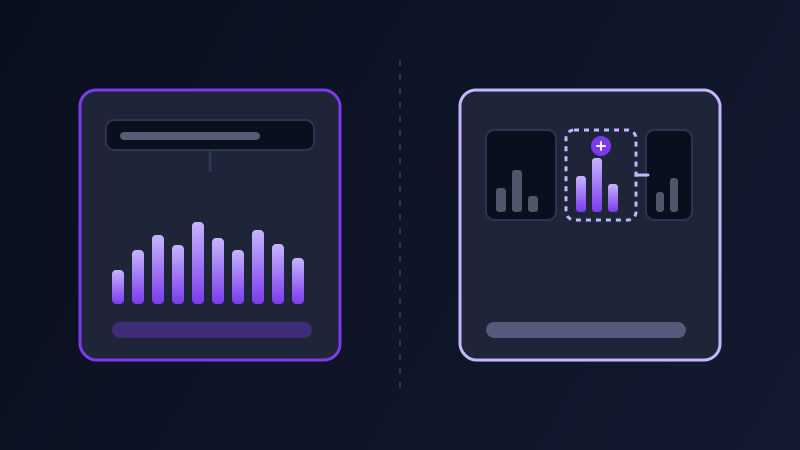
Suno vs Udio: How AI Music Prompts Actually Differ
Suno and Udio both turn a text prompt into a full song with vocals, but one is built around getting a complete track in one pass and the other around building and re-editing a track piece by piece. A prompt written for one wastes most of what the other is actually good at.
August 25, 2026 · 9 min read
How to Write AI Prompts for Real Estate and Interior Design Images That Look Like a Real Room
Virtual staging and interior design concepts are one of the fastest-growing uses for AI image tools, but the same prompt style that makes a great fantasy illustration usually makes a room look like a video game screenshot. Here is what actually keeps a generated room believable.
August 27, 2026 · 8 min read
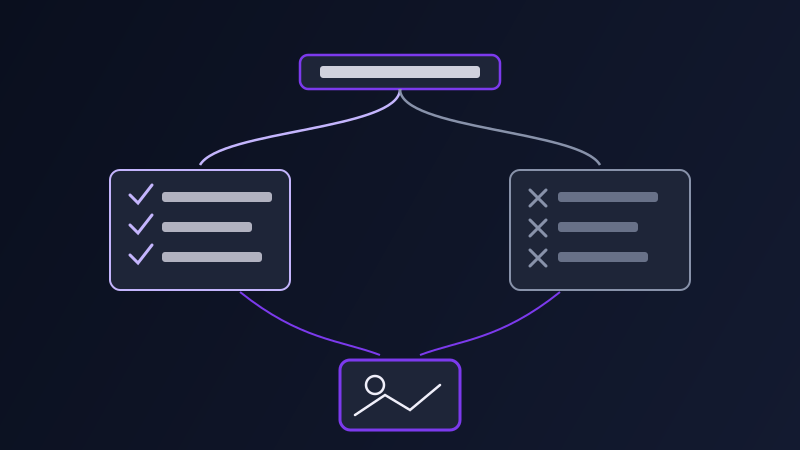
Negative Prompts Explained: How to Tell AI Image and Video Tools What to Leave Out
Most prompt advice focuses on what to say. Negative prompts, and the exclusion syntax that stands in for them where no dedicated field exists, are about what to leave out, and the major tools handle this so differently that a technique from one produces broken text in another.
August 27, 2026 · 8 min read
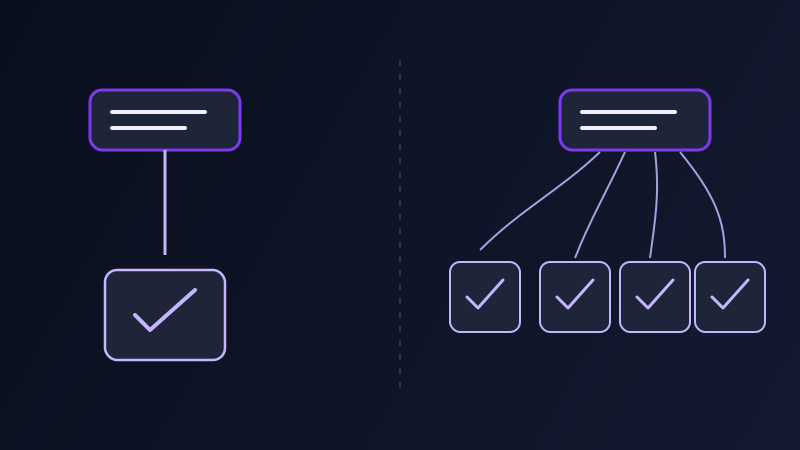
Single Prompts vs. Bulk Generation: When Batching AI Output Actually Saves You Time
Writing one prompt at a time is the default for a reason, and running a template across a whole list looks like an obvious time-saver — until the one flaw in that template shows up in every row of the batch. Here is when bulk generation actually pays off, and when it just multiplies a mistake.
August 28, 2026 · 9 min read
How to Write AI Prompts for Logos and Brand Identity That Don't Look Like Generic Clip Art
Most AI logo attempts come back looking like a detailed illustration with a company name floating over it. The fix has less to do with which tool you pick and more to do with what a logo prompt needs to specify that a normal image prompt does not.
August 31, 2026 · 8 min read
How to Write AI Prompts for Social Media Captions and Short-Form Video Hooks
A blog prompt and a caption prompt ask an AI model to do almost opposite jobs. Here is what actually makes a caption or a video hook prompt work, and why the instructions that produce a good paragraph produce a dead one the moment it has to compete for attention in a feed.
August 31, 2026 · 8 min read
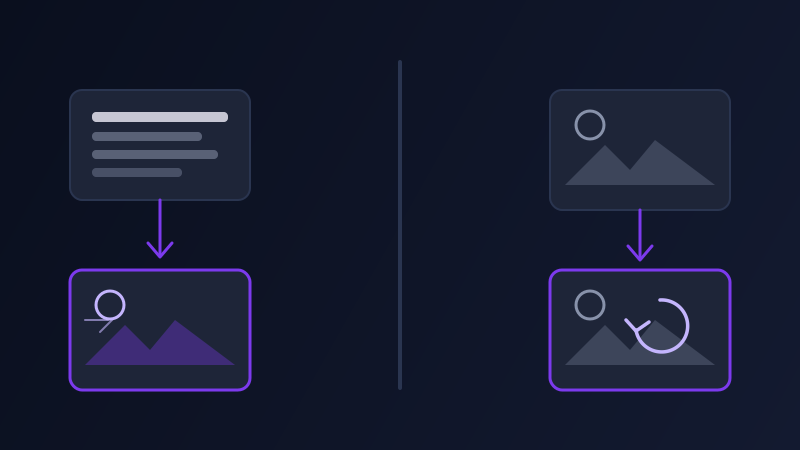
Text-to-Video vs. Image-to-Video Prompts: Why the Same Instructions Don't Work for Both
Starting a video from a blank prompt and starting it from an uploaded photo are treated as the same task by most people writing video prompts. They are not, and using one prompt style for both is the most common reason image-to-video clips look either overwritten or barely animated.
September 1, 2026 · 9 min read
How to Write AI Prompts for YouTube Thumbnails That Actually Get Clicks
A YouTube thumbnail has one job: win a click in a feed of competing thumbnails, usually shrunk to the size of a postage stamp. Here is how to prompt an AI image tool for the specific things that make a thumbnail work at that size, not a generic scene that only looks good full-size.
September 3, 2026 · 8 min read
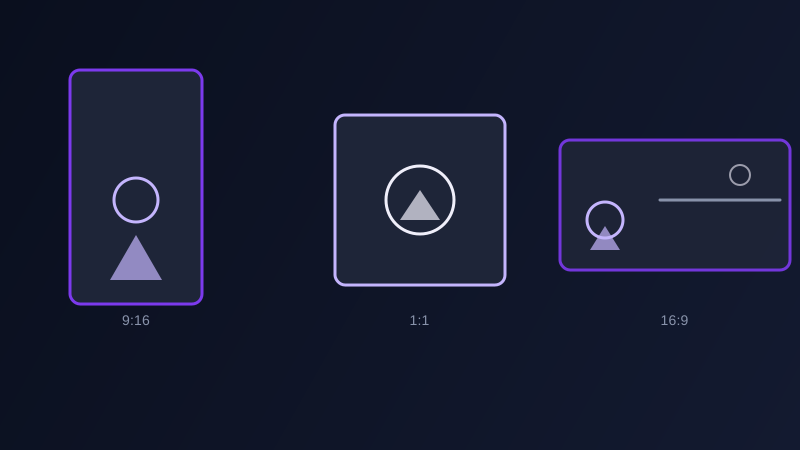
Vertical vs. Square vs. Widescreen: Why the Same AI Prompt Composes Differently for Each Aspect Ratio
The same prompt fed into an AI image or video tool with a different aspect ratio doesn't just get cropped differently, it composes differently from the start. Here is what actually changes between a 9:16 vertical shot, a 1:1 square, and a 16:9 widescreen frame, and how to prompt for each one instead of generating once and cropping after.
September 3, 2026 · 9 min read
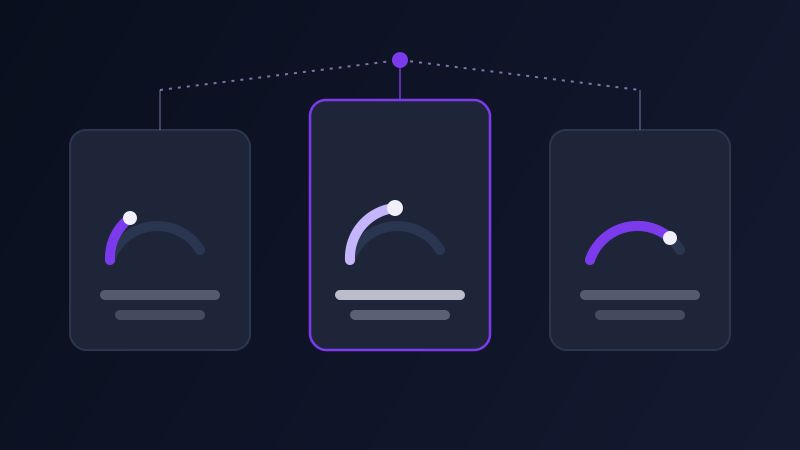
Precise, Balanced, or Creative: The Prompt Setting Almost Everyone Ignores
Most advice about writing a good AI prompt is really about picking the right category and structure. It skips a second, separate decision that changes the output just as much: how constrained or open-ended you want the answer to be. Here is what Precise, Balanced, and Creative actually do differently, and how to choose deliberately instead of defaulting to whichever one you picked last time.
September 4, 2026 · 9 min read
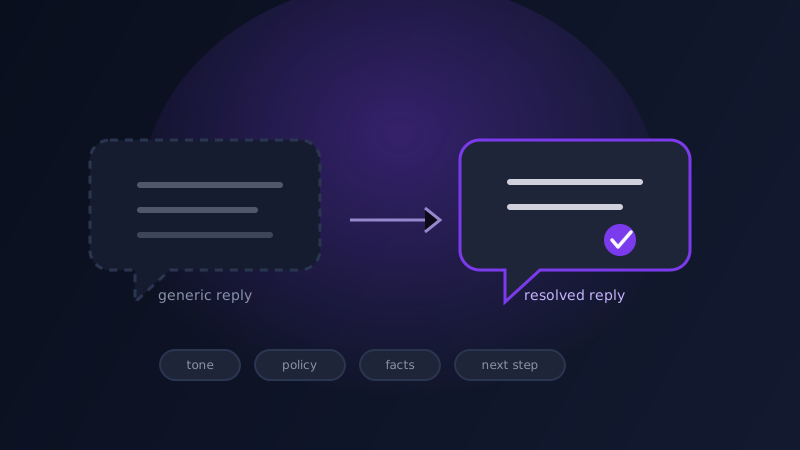
How to Write AI Prompts for Customer Support That Sound Like a Person, Not a Bot Script
A one-line support prompt tends to produce a reply that is technically polite and completely useless: it apologizes, restates the problem, and never actually answers it. The fix is naming the tone, the policy boundary, and the exact next step, the details a generic writing prompt never needed.
September 7, 2026 · 8 min read

How to Write AI Prompts for Book Cover Design That Don't Look Like Generic Stock Art
A one-line book cover prompt tends to produce something that could belong to any book in the genre, or no genre at all. The fix is naming the genre convention, the focal object, and the space a title actually needs, the details a general image prompt never has to think about.
September 7, 2026 · 8 min read
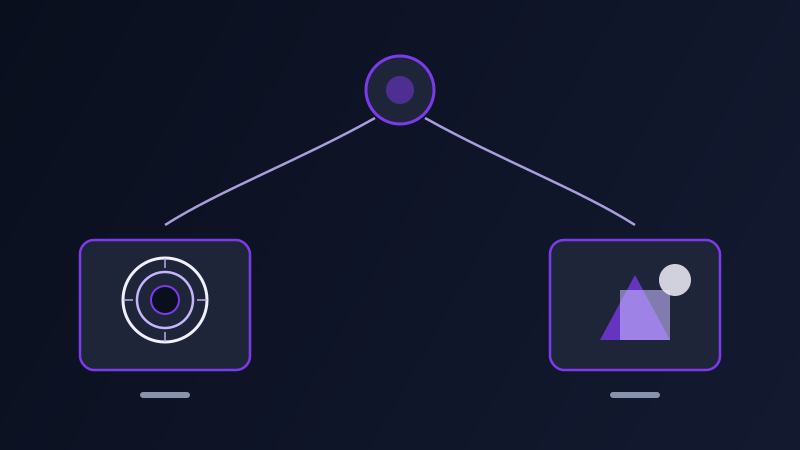
Photorealistic vs. Stylized AI Image Prompts: Why the Same Idea Needs Completely Different Instructions
The same idea — a woman drinking coffee by a window — needs a completely different prompt depending on whether you want it to look like a photograph or an illustration. Here is what actually separates a convincing photorealistic prompt from a convincing stylized one, and why using one prompt style for both goals is the most common way people end up with a muddy, in-between result.
September 8, 2026 · 9 min read
How to Write AI Prompts for Academic and Research Writing Without Getting Citations That Don’t Exist
Ask an AI to summarize the research on a topic and it will often invent papers that were never published, right alongside real ones it never actually read. Here is how to structure academic and research prompts so what comes back is something you can verify and actually build on.
September 10, 2026 · 9 min read
How to Write AI Prompts for Translation and Localization That Don’t Read Like a Direct Translation
A direct, word-for-word translation prompt gets you grammatically correct text that still reads like it was translated. Here is the structure that gets you copy, documentation, or messaging that reads like it was written for that market in the first place.
September 10, 2026 · 8 min read
Prompt Weighting and Emphasis Syntax Compared: How Different AI Image Tools Let You Control What Matters Most
Not every word in a prompt should carry equal influence over the result. Some AI image tools give you explicit syntax to say so — others don’t, and expect you to control emphasis a completely different way.
September 11, 2026 · 9 min read

The Anatomy of an Effective AI Prompt: Role, Context, Task, and Format
Most underperforming AI prompts aren’t wrong, they’re underspecified. Four deliberate parts turn a vague request into one the model can actually be held to.
September 14, 2026 · 8 min read
How to Write AI Prompts for Icons and UI Design Mockups That Look Like a Real Design System
A single AI-generated icon can look great in isolation and completely wrong sitting next to the other nineteen in your set. The fixes are almost all about consistency, not creativity.
September 14, 2026 · 8 min read
System Prompt vs. User Prompt: What Belongs in Each When You Talk to ChatGPT, Claude, or Gemini
Most people paste one long message into a chatbot and call it a prompt. ChatGPT, Claude, and Gemini were all built around a different idea — one channel for what should hold true for the whole conversation, and a separate one for what you actually want right now.
September 15, 2026 · 10 min read
How to Write AI Prompts for Meeting Notes That Actually Capture Decisions
Ask an AI note-taker to "summarize this meeting" and you usually get a tidy paragraph that reads well and helps nobody by Friday. Here is the prompt structure that surfaces decisions, owners, and deadlines instead of a narrative recap.
September 17, 2026 · 8 min read

How to Write AI Prompts for Fantasy and Sci-Fi Concept Art That Look Like Real Game Assets
A prompt that just names a fantasy creature or a sci-fi ship tends to produce dramatic fan art: striking lighting, no practical detail, nothing a concept artist or game studio could actually build from. Here is the structure that gets you something closer to a usable reference.
September 17, 2026 · 9 min read
Reference Image vs. Text-Only Prompt: When Uploading a Photo Beats Describing It From Scratch
Nearly every image AI tool now lets you upload a reference photo instead of typing a description from scratch — but the two starting points feed the model completely different information, and picking the wrong one is why a result looks close but never quite right. Here is what actually changes between them.
September 18, 2026 · 9 min read
Pika vs Luma vs Hailuo: How AI Video Prompts Actually Differ
Pika, Luma, and Hailuo all turn text into video, but each one is listening for a completely different kind of instruction inside the same prompt. Here is what actually changes between the three, and how to translate a prompt across them.
September 21, 2026 · 8 min read
How to Write AI Prompts for Grant Proposals That Don’t Sound Like Every Other Application in the Pile
Ask an AI to write your grant proposal and it will produce fluent, confident prose that says nothing a reviewer hasn’t read fifty times already. Here is how to structure funding prompts so what comes back is specific enough to actually win.
September 21, 2026 · 9 min read
Prompt Parameters vs. Plain Language: How AI Tools Split Control Between the Two
Some parts of an AI prompt are better handled by a flag or a setting than by a sentence — and some are the opposite. Knowing which is which stops you from fighting a tool that already gave you the control you were describing.
September 22, 2026 · 9 min read
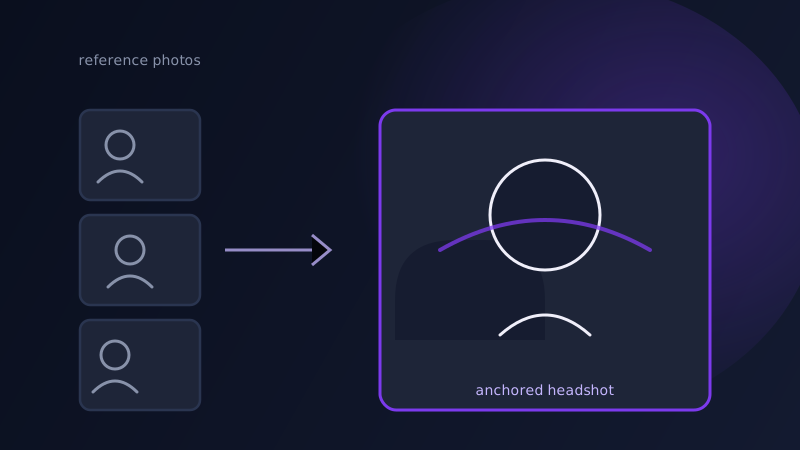
How to Write AI Headshot Prompts That Look Like You, Not a Stranger
AI headshot generators promise a polished profile photo in minutes, but most prompts come back looking like a well-dressed stranger. Here is how to prompt for a likeness that still looks like the person who uploaded the photos.
September 24, 2026 · 8 min read
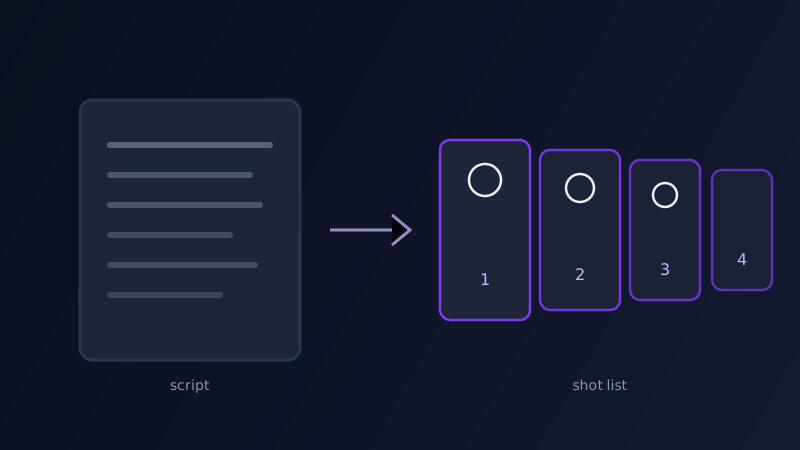
How to Write AI Prompts for Video Scripts and Storyboards That Actually Shoot
A script that reads well on the page and a storyboard an AI video tool can actually turn into shots are two different documents. Here is how to prompt for both without losing the idea in translation.
September 24, 2026 · 9 min read
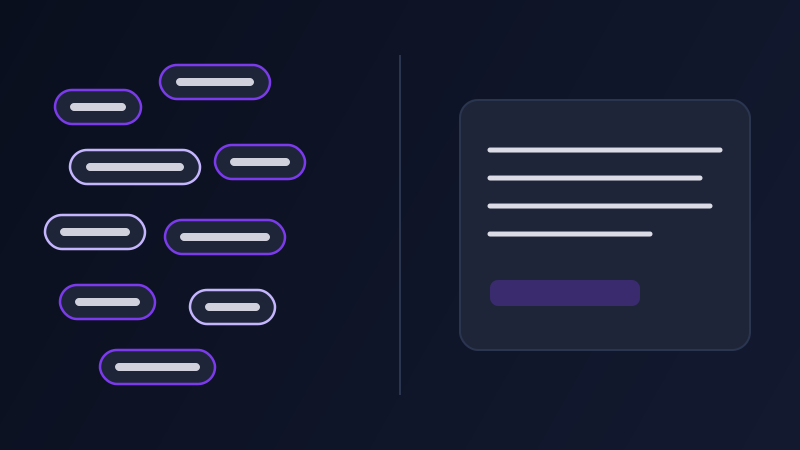
Tag-Based vs. Natural-Language Prompts: Why Some AI Image Tools Want Keywords and Others Want Sentences
A comma-separated string of keyword tags and a full descriptive sentence are not two styles of the same prompt — they are two different prompting languages, built for models trained on different kinds of data. Using the wrong one is why an idea that looked great in one tool comes out generic in another.
September 25, 2026 · 9 min read
How to Write AI Prompts for Podcast Cover Art That Doesn’t Get Lost at Thumbnail Size
Podcast platforms require cover art at 3000 by 3000 pixels, but almost nobody ever sees it that large. Here is how to prompt for art that still reads clearly once it shrinks to a thumbnail.
September 28, 2026 · 8 min read
How to Write Persona Prompts for Custom GPTs and AI Chatbots That Don’t Break Character
A custom GPT or branded chatbot needs a completely different kind of prompt than a one-off question, because it has to hold its voice across an entire conversation instead of a single exchange. Here is the structure that keeps a persona from drifting back into a generic assistant by message six.
September 28, 2026 · 9 min read
Fixed Seed vs. Random Seed: What Reproducibility Actually Buys You in AI Image and Video Generation
A seed number looks like it should freeze a result in place. It only ever pins down part of it — and knowing exactly which part is the difference between using a seed well and being confused when it "stops working."
September 29, 2026 · 9 min read
How to Write AI Prompts for Children’s Book Illustrations That Stay Consistent Page to Page
A single beautiful illustration is easy to get from an AI image tool. Thirty pages that look like they belong to the same book, with the same character, is a completely different problem, and most prompts quietly fail it.
October 1, 2026 · 8 min read
How to Write AI Tattoo Design Prompts That Translate to an Actual Tattoo
An AI image that looks striking on a screen can be unworkable on skin. Here is how to prompt for a tattoo design a real artist can actually trace, shade, and scale.
October 1, 2026 · 7 min read
Named Style References vs. Descriptive Attributes: Why "In the Style of X" Works in Some AI Tools and Backfires in Others
Naming a style is faster to type than describing one. Whether that shortcut actually works depends entirely on which AI tool is reading it, and getting that wrong wastes far more time than writing the longer version would have.
October 2, 2026 · 9 min read

Single-Reference vs. Multi-Reference Prompts: How to Blend a Face, a Style, and a Pose Into One AI Image
A single reference image tells an AI model what one thing should look like. The moment you need a specific face, a specific style, and a specific pose at once, you need a different technique, and most people never learn it exists.
October 5, 2026 · 8 min read
How to Write AI Prompts for Motion Graphics and Explainer Videos That Don't Look Like a Slide Deck
Photorealistic AI video prompts and motion graphics prompts ask for completely different things. Borrow the wrong vocabulary and an explainer video comes out looking like a static slide deck with a camera move bolted on.
October 5, 2026 · 8 min read

On-Screen Camera Controls vs. Written Camera Language: Two Ways to Direct an AI Video Shot, Compared
Some AI video tools let you drag a camera path or paint a motion vector on screen. Others only ever read your words. Using the wrong approach for the tool you have is the most common reason a camera move comes out flat, wrong, or ignored entirely.
October 6, 2026 · 9 min read
How to Get Readable Text in AI-Generated Images
Asking an AI image tool to render a word is still one of the easiest ways to get a confident, garbled result. A handful of habits around what you ask for, and how much of it, fix most of the failures before they happen.
October 8, 2026 · 8 min read
How to Write AI Prompts for Infographics and Data Visualizations That Don't Look Cluttered
An infographic prompt fails for a different reason than a normal image prompt fails: it asks for too many competing elements at once. Here is how to structure the request so the result reads as one clear idea instead of a pile of icons.
October 8, 2026 · 8 min read
JSON-Structured Prompts vs. Natural-Language Prompts: When Structure Helps and When It Gets in the Way
Wrapping a prompt in JSON feels like it should make a model more reliable. Sometimes it does. Sometimes it just gives the model a rigid shape to fill in badly. Here is how to tell which situation you are actually in.
October 9, 2026 · 10 min read
How to Write AI Prompts for LinkedIn Posts That Don't Read Like Everyone Else's Thought Leadership
Ask most AI tools for a LinkedIn post and you get the same three-line hook, the same humble brag disguised as a lesson, and the same bolded takeaway at the bottom. Here is how to prompt your way out of the template everyone else is already posting.
October 12, 2026 · 8 min read
How to Write AI Prompts for Text-to-3D Asset Generation That Produce a Usable Model, Not a Blob
Text-to-image prompting habits carry over to text-to-3D tools less than people expect, because a 3D model has to hold up from every angle, not just the one you described. Here is what a 3D prompt needs that an image prompt never had to include.
October 12, 2026 · 9 min read
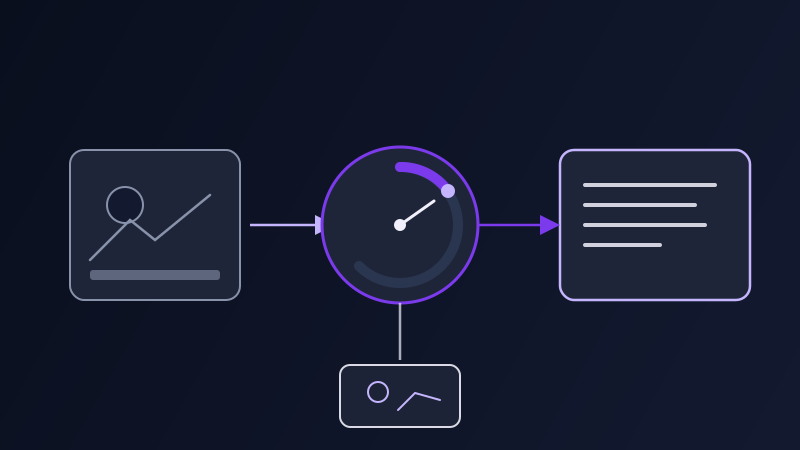
Denoising Strength vs. Prompt Rewriting: The Two Dials That Actually Control an AI Image-to-Image Edit
Every image-to-image edit, in Stable Diffusion, Midjourney, or Firefly, is controlled by two separate dials: a strength slider and the words in your prompt. Most people only ever touch one of them, then wonder why turning it up either ignores their photo or ignores their prompt.
October 13, 2026 · 9 min read
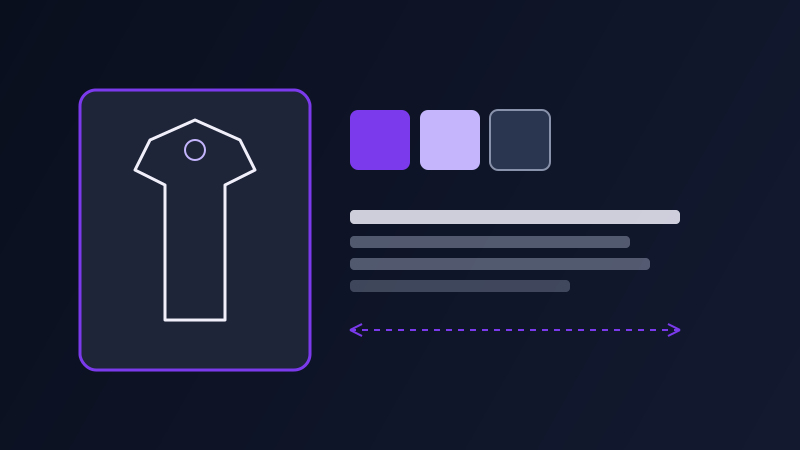
How to Write AI Prompts for Fashion and Apparel Design That Look Production-Ready, Not a Mood Board
A fashion sketch that looks gorgeous but tells a pattern maker nothing is not a design, it is a mood board. Here is how to prompt AI image tools for apparel concepts that actually communicate construction, fabric, and fit.
October 15, 2026 · 9 min read
Prompt Templates vs. Ad-Hoc Prompts: When a Reusable System Beats Writing From Scratch Every Time
Writing a fresh prompt every time feels flexible, but it quietly costs you consistency and time the moment you repeat a task. Here is how to tell when a reusable prompt template actually pays off, and when it gets in the way.
October 15, 2026 · 8 min read
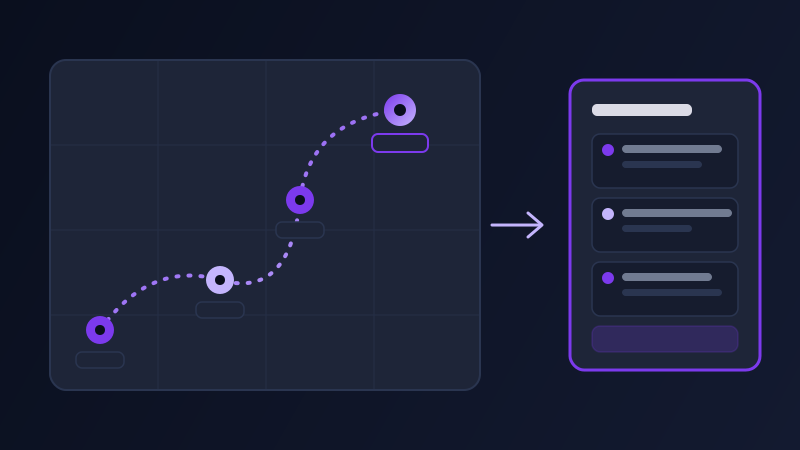
How to Write AI Travel Planning Prompts That Build a Real Itinerary, Not a Top 10 List
"Plan me a trip to Lisbon" gets you the same seven landmarks every travel blog already recommends. Here is how to prompt for an itinerary that actually fits your dates, your pace, and the people you are traveling with.
October 16, 2026 · 9 min read
How to Write AI Prompts for Event Invitations and Posters That Don't Look Like a Templated Flyer
Ask for "a wedding invitation design" and you get the same gold foil script and botanical border every stock template site already sells. Here is how to prompt for invitation and poster art that actually matches your event.
October 19, 2026 · 8 min read
Cursor vs GitHub Copilot vs Claude Code: How Prompting Actually Differs Between AI Coding Assistants
A chat-based coding question, an inline autocomplete, and an agentic multi-file task are three different jobs, and the three major AI coding assistants are built around different mixes of them. Here is how to prompt each one for what it is actually good at.
October 19, 2026 · 9 min read