Single-Reference vs. Multi-Reference Prompts: How to Blend a Face, a Style, and a Pose Into One AI Image
October 5, 2026 · 8 min read
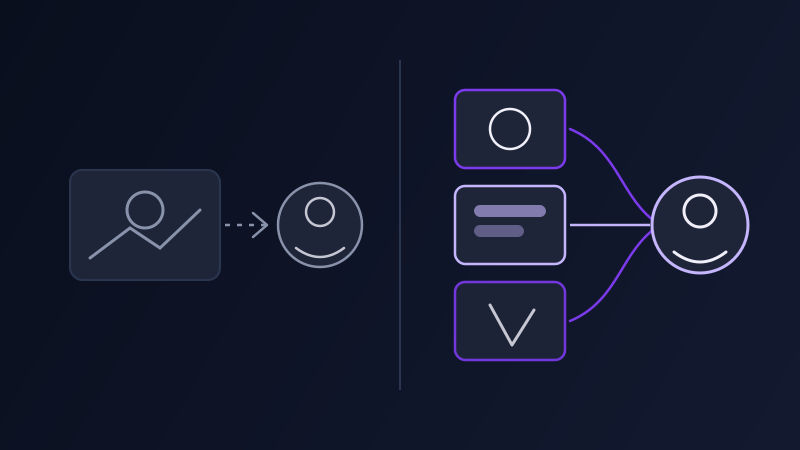
Most people's first experience with reference images in AI tools is a single upload: one photo in, one stylistic match out. That works fine when the job is simple, matching a pose, matching a palette, matching a face. It stops working the moment the actual goal needs more than one of those things at once, a specific person wearing a specific outfit in a specific setting, or a product shot that needs to match an existing brand style while also matching a particular camera angle. A single reference image can only carry one instruction clearly. Asking it to carry three at once is how you get a result that half-matches everything and fully matches nothing.
Why one reference image runs out of room
A reference image works by giving the model something concrete to anchor to, instead of relying entirely on words. The tradeoff is that a photo is a single, fused object: a model reading one reference image cannot easily tell whether you want it to copy the face, the clothing, the lighting, the pose, or the background, because all five are baked into the same pixels with no labels attached. If you only need one of those five, that ambiguity rarely matters, the model tends to guess right because there is usually one obvious dominant feature. If you need the face from one source and the pose from another, a single image genuinely cannot carry that instruction. It has nowhere to put the second idea.
How multi-reference prompting actually works
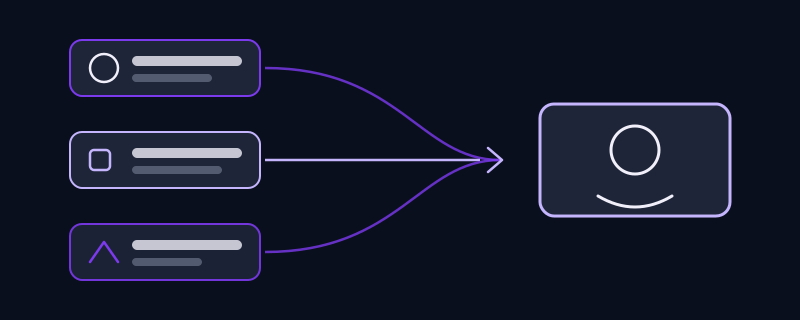
Multi-reference prompting solves this by splitting the job across more than one image and assigning each one a clear, narrow role instead of asking one photo to do everything. A face reference supplies identity. A style reference supplies palette, medium, and texture. A pose or composition reference supplies body position and camera angle. Each image is doing one job, which is exactly the constraint a single reference image cannot offer. The text prompt sitting alongside the images is what tells the model which reference governs which attribute, since the tool has no way to infer that assignment from the images alone.
Tool by tool: who supports this and how
Midjourney accepts multiple image URLs in the same prompt, and lets you assign a relative weight to each one, so a face reference can be weighted higher than a loose style reference instead of the two competing equally. Google's Gemini image tools (including the model commonly called Nano Banana) handle multi-image blending natively through conversational prompting, you upload several images in the same turn and describe in plain language which one should supply which attribute, and the model reads that assignment directly from your sentence. ChatGPT's image generation accepts multiple uploaded images in one request the same way, with the text prompt doing the work of specifying roles. Stable Diffusion's open ecosystem handles this more mechanically through dedicated extensions, IPAdapter for carrying a face or style from a reference image, ControlNet for carrying pose or composition from a separate reference, stacked together rather than blended through a single text instruction.
Writing the text prompt that sits on top of the references
The images alone are not the prompt, they are inputs to it. The text still has to assign each image its job explicitly: "use the first image for the person's face and expression, the second image for the illustration style and color palette, and the third image for the pose and camera angle, combine them into one coherent portrait." Vague instructions like "combine these images" without assigning roles tend to produce a literal collage-like blend instead of a coherent single result, because the model has no instruction for which attribute should win where the references conflict. The more specific the role assignment, the cleaner the separation in the output.
When a single reference is still the right call
Multi-reference prompting is a specific tool for a specific problem, not an upgrade to reach for by default. If one photo already carries everything the result needs, the face, the outfit, and the setting all in the same frame, adding a second or third reference just introduces attributes to assign that the single image already handled on its own. The extra references add a step of planning, role assignment, and sometimes a weighting decision, for no gain if nothing actually needs to come from somewhere else. The reason to reach for multiple references is a genuine conflict a single image cannot resolve, not habit.
Common mistakes
Uploading three references without saying what each one is for, which leaves the model guessing and usually produces a muddled average instead of a clean blend. Using two references that conflict on the same attribute, two different style references with no indication of which should dominate, instead of one style reference and one weight or priority instruction. Expecting a tool that only accepts a single reference image to behave like one built for multiple references, each tool's actual input limit matters more than what the prompt asks for. And skipping a weight or priority setting entirely when the tool offers one, since an unweighted blend defaults to treating every reference as equally important, which is rarely what the goal actually needs.
Where Promptima handles this
Knowing which tool supports multiple references, how many it accepts, and how to phrase the role assignment for each one is not something most people keep in their head, and it changes as tools update their upload limits and blending behavior. Promptima's image prompt generator asks which references you're working with and what role each should play, then writes the multi-image prompt structure in the format your specific target tool actually expects, whether that is weighted URLs, a plain-language role assignment, or a stacked extension workflow.
Frequently asked questions
What is a multi-reference image prompt?
A prompt that uses more than one reference image at once, with each image assigned a specific role, such as one supplying a face, another supplying a style, and a third supplying a pose, rather than asking a single image to carry every attribute at once. The text prompt tells the model which reference governs which part of the result.
Which AI image tools support multiple reference images?
Midjourney accepts multiple weighted image URLs in one prompt. Gemini's image tools and ChatGPT's image generation both accept several uploaded images in a single request, with plain-language instructions assigning each one a role. Stable Diffusion handles it through separate extensions, typically IPAdapter for face or style and ControlNet for pose, stacked together rather than blended from one text instruction.
Why does blending multiple images produce a muddled result sometimes?
Usually because the text prompt never assigned a clear role to each reference. Without an explicit instruction like "use the first image for the face and the second for the style," the model has to guess which attribute each reference is meant to contribute, and an unweighted guess often produces a blurred average rather than a clean combination.
Do I need a different reference image for every attribute I care about?
Not necessarily, a single reference image is still the right choice when you only need to match one or two closely related attributes, like a pose and a camera angle from the same photo. Multiple references earn their complexity once the attributes genuinely come from different sources, a specific face that needs to appear in a specific illustration style, for instance.
Try Promptima's image prompt generator, upload more than one reference and it writes the multi-image prompt structure your target tool actually needs →
✦ Try Promptima freeMore articles
Best AI Prompt Optimizer Tools in 2026 (And When to Use Each)
Prompt marketplaces, browser extensions, manual prompt engineering, and dedicated optimizers all solve a different version of the same problem. Here is how to tell which one you actually need.
How to Turn One Photo Into a Ready-to-Use AI Video Prompt
You have an image whose look you want to bring to life as a video. The problem is that video AI tools don’t read image prompts — they need camera, motion, and duration described in a completely different structure. Here’s how to bridge the two.