How to Write AI Prompts for Marketing Copy That Doesn’t Read Like Every Other AI-Written Ad
August 3, 2026 · 9 min read
Ask an AI tool to "write ad copy for my product" and you get something fluent, upbeat, and nearly interchangeable with the ad copy every other business generated from the same one-line prompt. It reaches for the same handful of words (elevate, unlock, seamless, empower, revolutionize) and the same three sentence shapes, because a vague prompt gives the model nothing to differentiate on. The copy is not wrong, exactly. It is generic enough to describe almost any product in your category, which defeats the point of writing it in the first place.
Why "write me an ad" gets you the same five words as everyone else
A language model without specific input has to fill in every gap with the most statistically common version of marketing language it has seen, which is, by definition, the most generic version available. Ask for "an Instagram ad for a productivity app" with nothing else and the model has no audience to write for, no competitor to differentiate from, no real feature to lead with, and no brand voice to match, so it defaults to broad claims that could describe a thousand different productivity apps. The fix is not a better one-line prompt. It is giving the model the specific inputs that make generic language unnecessary.
The five layers a marketing prompt needs
Audience: who is actually reading this, described specifically enough to change the copy ("freelance designers juggling three clients at once," not "busy professionals"). Brand voice: is the tone playful, blunt, technical, warm, and what should it never sound like (corporate, salesy, overly formal are all useful things to rule out explicitly). The real benefit versus the generic claim: the specific thing your product does, stated as a fact, not the vague outcome every competitor also claims ("saves four hours a week on invoice reconciliation" beats "boost your productivity"). Format and length: a 30-character headline, a 90-character Google ad description, and a three-paragraph landing page section are different writing tasks, and the model needs to know which one before it starts. A constraint against cliches: explicitly naming the words and phrases to avoid (elevate, unlock, game-changer, in today’s fast-paced world) does more to fix generic output than almost anything else in the prompt, because it removes the model’s default fallback language instead of hoping it avoids that language on its own.
Four marketing prompt tasks worth knowing how to structure
Ad copy: give the model the audience, the one specific benefit to lead with, the platform (since a LinkedIn ad and a TikTok caption are not the same register), and a character limit, then ask for three distinct angles rather than one safe version, since the first draft a model produces is usually its most generic option. Product descriptions: the useful prompt names the actual differentiator against a named alternative ("compared to a generic to-do app, this one auto-schedules tasks based on your calendar") rather than asking the model to "describe the product," which invites a feature list with no argument attached. Email subject lines: ask for a batch of ten with an explicit constraint to vary the approach (curiosity, urgency, direct benefit, question) rather than a single subject line, since a single request tends to produce one safe, forgettable option instead of a real set to choose from. Social captions: specify the platform’s actual norms (a LinkedIn caption reads differently from an Instagram caption) and give the model your brand voice in a sentence or two, or better, in an example of something you have already written that sounds right.

Examples of your voice beat descriptions of your voice
Telling a model "our brand voice is confident but approachable" produces copy that is technically consistent with that description and still sounds like every other brand that used those same two adjectives. Pasting two or three sentences you have actually published, ones that sound right to you, and asking the model to match that voice specifically produces something closer to what you actually sound like, because it is matching a real pattern instead of interpreting an abstract label. This is the single highest-leverage addition to a marketing prompt: a short real sample beats a paragraph of adjectives every time.
A worked example, before and after
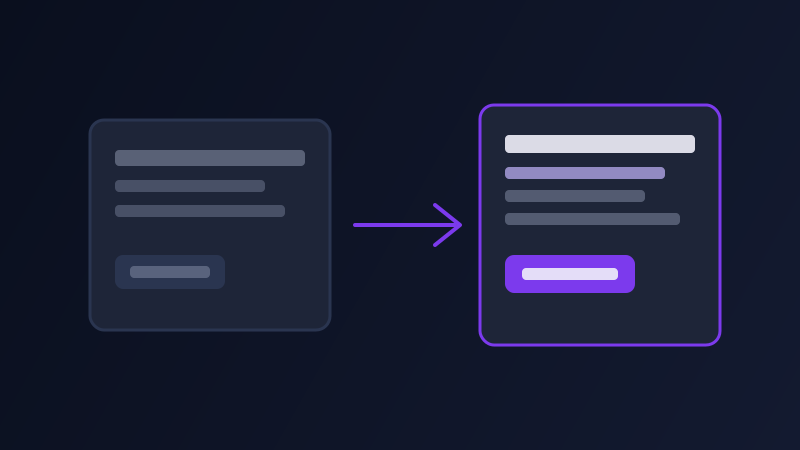
Weak prompt: "write a Facebook ad for my meal kit delivery service." No audience beyond the product category, no differentiator, no voice, no length limit, so the model reaches for "delicious, convenient meals delivered to your door" and calls it done. Structured prompt: "Write three Facebook ad variations for a meal kit service targeting parents of picky eaters who are tired of cooking two separate dinners every night. The specific benefit: our recipes include one swappable ingredient per meal so one base recipe works for the whole family. Voice: direct and a little wry, never precious about food, no phrases like ‘elevate your dinner’ or ‘culinary journey.’ Primary text under 125 characters, one clear call to action each." The second version gives the model an actual person to write for, an actual claim to make, an actual voice to imitate, and an actual constraint on length and cliches, leaving very little room to fall back on generic language.
Common mistakes
Asking for "creative" or "punchy" copy without defining what that means for your specific brand, which the model interprets using its own generic idea of punchy. Requesting one version instead of several angles, then settling for whatever comes back because there is nothing to compare it against. Describing your brand voice in adjectives instead of pasting a real example of it. Skipping the platform and length entirely and being surprised the copy needs heavy editing to fit an actual ad unit.
Frequently asked questions
Why does AI-generated marketing copy sound the same across different brands?
A vague prompt gives the model no specific audience, differentiator, or voice to work from, so it defaults to the most statistically common marketing language it has seen, which is generic by definition. Two different businesses using the same vague prompt tend to get copy that reads almost identically.
What is the fastest way to fix generic-sounding AI ad copy?
Add a specific audience, a real benefit stated as a fact rather than a vague outcome, and an explicit list of words to avoid (elevate, unlock, game-changer, and similar). The cliche-avoidance constraint alone removes most of the model’s default fallback language.
Should I describe my brand voice or show an example of it?
Showing an example works better. Adjectives like "confident but approachable" get interpreted through the model’s own generic idea of those words, while a real sentence or two you have already published gives the model an actual pattern to match.
How many versions of ad copy should I ask for at once?
Ask for several distinct angles, not one. A single request tends to produce the safest, most generic option the model has, while asking for three or more variations with different approaches (urgency, curiosity, direct benefit) gives you something to actually compare and choose from.
Try Promptima’s Marketing prompt category free →
✦ Try Promptima freeMore articles

Best AI Prompt Optimizer Tools in 2026 (And When to Use Each)
Prompt marketplaces, browser extensions, manual prompt engineering, and dedicated optimizers all solve a different version of the same problem. Here is how to tell which one you actually need.
How to Turn One Photo Into a Ready-to-Use AI Video Prompt
You have an image whose look you want to bring to life as a video. The problem is that video AI tools don’t read image prompts — they need camera, motion, and duration described in a completely different structure. Here’s how to bridge the two.