Precise, Balanced, or Creative: The Prompt Setting Almost Everyone Ignores
September 4, 2026 · 9 min read

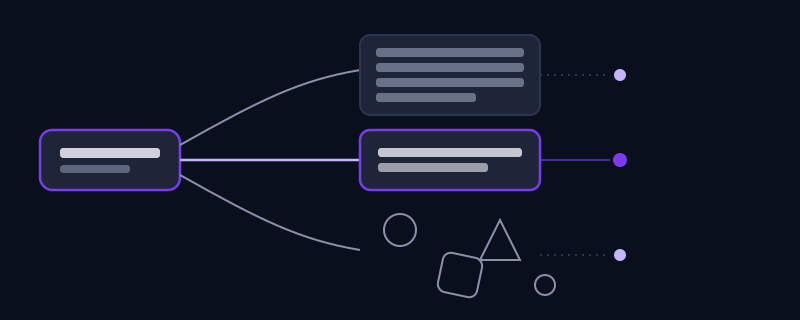
Ask most people what makes a prompt good and they will describe the topic layer: pick the right category, give context, specify a format. That is real advice and it matters, but it answers only half the question. The other half is not what you are asking about, it is how open you want the answer to be, and it gets skipped constantly because it does not feel like a decision at all — most people either take whatever default their tool offers or never notice there was a choice to make in the first place. Promptima surfaces this as three explicit optimization styles, Precise, Balanced, and Creative, sitting right next to the category picker, and the reason it is a separate control rather than something folded into the category is that it genuinely is a separate axis. A "Marketing" prompt run through Precise and the same idea run through Creative do not just read a little differently, they are built to produce structurally different kinds of answers.
Category tells the AI what you want; style tells it how open to be
Category sets the subject matter and the vocabulary the model should draw from — legal, marketing, science, cooking. Style sets something orthogonal to that: how much the prompt narrows the model toward one specific, well-bounded answer versus how much room it leaves the model to explore several directions and surprise you with one you did not think to ask for. A precise prompt in the marketing category and a precise prompt in the science category share almost nothing on the surface, but they share the same underlying instruction pattern — define scope tightly, ask for structure, remove ambiguity. Swap in creative for either category and the pattern flips the same way in both: loosen the scope, invite alternatives, tolerate — even reward — an answer that goes somewhere you did not specify. Treating style as part of the category, rather than its own decision, is how people end up running every brainstorming task through whatever default style they happened to land on for their last technical question, and wondering why the results feel flat.
What Precise actually adds to a prompt
Precise is not "more detailed" in a vague sense, it is a specific set of additions: an explicit scope boundary (what the answer should and should not cover), a required output structure (a table, a numbered list, a specific set of fields), and instructions to state assumptions rather than silently pick one and run with it. A precise prompt for a competitive analysis does not just say "compare these two products," it specifies the exact dimensions to compare, the format to return them in, and what to do when data is missing (flag it, rather than fabricate a plausible-sounding number). This is the style built for research, technical specs, legal drafting, financial summaries, and anything else where a confident-sounding but slightly wrong answer is worse than a narrower, verifiably correct one. The cost is real: a precise prompt forecloses the model exploring an angle you did not think to specify, because foreclosing exactly that is the point.
What Creative actually adds to a prompt
Creative does the opposite on purpose. Instead of narrowing scope, it widens the frame and explicitly invites divergence — asking for multiple distinct directions rather than one refined answer, tolerating an unconventional interpretation of the brief, and avoiding over-specifying details that would lock the model into a single safe path before it has explored the space. A creative prompt for a product name does not hand over a locked list of acceptable patterns, it describes the feeling the name should evoke and asks for a spread of approaches — literal, abstract, invented words, borrowed phrases — rather than five variations on the same idea. Used on the wrong task, this is a liability: nobody wants a creatively interpreted tax filing. Used on the right one — naming, campaign concepts, opening lines, brainstorming — it is the difference between five genuinely different options and five minor rewordings of the same one.
Balanced: the default that earns its name more often than it looks like it should
Balanced is not the average of the other two, it is its own profile: clear enough that the model is not guessing at basic requirements, but not so constrained that a genuinely useful answer outside the literal ask gets ruled out before it has a chance. This is the right setting for the bulk of everyday AI use — a first draft of an email, an explanation of a concept for a specific audience, a rough outline before you know exactly which structure you want. Most people should be defaulting to Balanced for anything that is not clearly headed toward a precise deliverable or clearly an open brainstorm, and the mistake worth naming here is the reverse of underuse: some people run everything through Precise because it feels like the "serious" or "careful" option, and end up with technically correct but oddly narrow answers to questions that had room for a better one they never got to see.
Matching style to the actual task, not the category label
The clearest way to see that style and category are independent is to hold the category fixed and change only the style. Marketing plus Precise produces a data-backed campaign brief with real numbers, a specific format meant for a stakeholder deck, and clearly labeled assumptions where data is missing — the kind of thing you would actually present in a meeting. Marketing plus Creative, same category, produces raw concept generation for an early brainstorm: five different campaign angles, none of them fully fleshed out, meant to be argued over rather than shipped. Science plus Precise reads like a literature-review request — rigorous, sourced, scoped to what is actually established. Science plus Creative reads like a hypothesis-generation prompt for a research direction nobody on the team has tried yet, explicitly asking for the speculative option most careful writing would suppress. Even "Creative Writing" as a category benefits from this distinction: a precise creative-writing prompt (tight constraints on voice, length, and structural beats) produces something closer to a commissioned piece that fits an exact brief, while a creative-writing prompt run through the Creative style produces something closer to raw material you would then edit down.
Switching styles mid-project instead of picking once and staying there
The most useful pattern is not choosing one style and sticking with it for a whole project, it is switching deliberately between stages. Start with Creative to generate a spread of genuinely different directions when you do not yet know which one is right — names, angles, structural approaches, opening concepts. Once one direction wins, switch to Precise for the same underlying task to firm it up into something production-ready: locked scope, a defined format, no more open interpretation. Balanced sits in the middle as the style for everything that does not need either extreme — most day-to-day drafting, most one-off questions, most first passes at something you will only lightly revise. Treating this as a two- or three-step sequence rather than a single setting turns the style picker from a cosmetic option into an actual part of how you get to a finished result, not unlike running a rough draft through one pass and a polish through another, except the "pass" here is a different instruction to the model rather than a different prompt you have to rewrite from scratch each time.
Common mistakes
Running a brainstorming task through Precise out of habit, and getting one safe, narrow answer instead of the spread of options the task actually needed. Running a task with a real factual or legal constraint through Creative, and getting a fluent, confident answer that quietly drifted from what was actually true or actually required. Assuming a category name sets the style automatically — "Creative Writing" the category does not mean Creative the style is already applied, and a precise prompt inside that category is often exactly what a commissioned piece with a specific brief needs. Settling into one default style across every task type and never testing what the other two would have produced on the same input, which is the fastest way to miss that the flat, samey feeling in your outputs was a style problem, not a category problem.
Promptima’s optimizer puts this choice in front of you before it writes anything — Precise, Balanced, or Creative, sitting alongside the category picker rather than buried in it — specifically so it is a decision you make on purpose for the task in front of you, not a default you inherit from whatever you picked last time.
Frequently asked questions
What is the difference between a Precise, Balanced, and Creative AI prompt style?
Precise adds explicit scope boundaries, a required output structure, and instructions to flag rather than guess at missing information — best for research, technical, legal, and data tasks. Creative widens the frame instead, asking for multiple divergent directions rather than one refined answer — best for brainstorming, naming, and campaign concepts. Balanced sits between the two: clear enough to avoid vague output, but not so constrained that it forecloses a useful answer outside the literal ask, and is the right default for most everyday drafting.
Does the category I pick already determine the right style?
No — they are independent settings. A category like Marketing or Science can be run through Precise for a rigorous, presentation-ready result or through Creative for early-stage brainstorming, and the two outputs look structurally different even though the topic is identical. Even a "Creative Writing" category benefits from choosing Precise when the piece needs to fit a tight, commissioned brief rather than serve as raw material to edit down.
Should I use the same style for every prompt on a project?
Usually not. A common effective pattern is starting with Creative to generate a spread of different directions when you do not yet know which one is right, then switching to Precise on the winning direction to firm it up into a production-ready result. Balanced works well for everything in between that does not need either extreme.
Is Balanced just an average of Precise and Creative?
No — it is a distinct profile, not a midpoint. It aims for clarity and completeness without either the tight scope boundaries of Precise or the deliberate divergence of Creative, which is why it works well as a default for day-to-day tasks like a first draft, an explanation, or a rough outline, rather than being a weaker version of the other two.
What happens if I use the wrong style for a task?
Using Creative on a task with a real factual, legal, or technical constraint risks a fluent-sounding answer that has quietly drifted from what was actually required. Using Precise on an open-ended brainstorming task risks getting one safe, narrow answer instead of the range of genuinely different options the task needed. Both mistakes are common because the wrong style still produces a confident, readable result — it just is not the kind of result the task called for.
Try Promptima’s Precise, Balanced, and Creative styles on the same idea and compare the output →
✦ Try Promptima freeMore articles
Best AI Prompt Optimizer Tools in 2026 (And When to Use Each)
Prompt marketplaces, browser extensions, manual prompt engineering, and dedicated optimizers all solve a different version of the same problem. Here is how to tell which one you actually need.
How to Turn One Photo Into a Ready-to-Use AI Video Prompt
You have an image whose look you want to bring to life as a video. The problem is that video AI tools don’t read image prompts — they need camera, motion, and duration described in a completely different structure. Here’s how to bridge the two.